
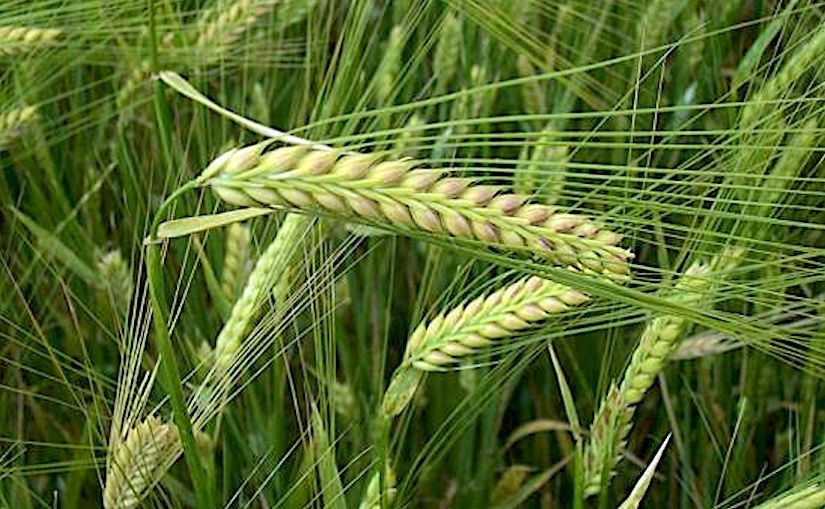
Barley (Hordeum vulgare L.) is one of the Neolithic founder crops of Old World agriculture. It is a flowering plant belonging to the family Poaceae or Gramineae (herbs) that is cultivated in temperate climates across the world at 350–4050 m above sea level and evolved from H. spontaneum (K. Koch) Thell. The economically most important species of the genus is barley, H. vulgare. Species of barley consist of diploid (2n = 2x = 14), tetraploid (2n = 4x = 24), and hexaploid (2n = 6x = 42) cytotypes. Barley constitutes the fourth most important grain crop in the world after wheat, rice, and maize. Barley grain is used as livestock feed and forage, malt beverages, human food, and soil improvement and has medicinal value but is barely considered a highly-needed crop of the present era. Common barley hails originally from western Asia and North Africa. It is one of the earliest documented agricultural grains, dating back to the Neolithic period (8500 years ago) in the Nile Delta portion of the Fertile Crescent. Barley is a rich source of proteins, B vitamins, niacin, minerals, and fiber dietary; also, it is a good source of manganese and phosphorus. Raw barley consists of carbohydrates (78%), proteins (10%), water (10%), and fat (1%). This chapter discusses the taxonomy, economic importance, origin and history, germplasm resources, traditional breeding methods and biotechnology methods, and their application for crop improvement in association with conventional breeding methods of barley.
| Requirement | |
|---|---|
| Hardiness | 8,9,10 |
| Heat Zones | 8,9 |
| Climate Zones | 8, 9, 10 |
| Plant Type | Annuals |
| Plant Family | Poaceae |
| Exposure | Full Sun, Partial Sun |
| Season of Interest | Fall, Winter |
| Height | 2' - 3' |
| Spread | |
| Water Needs | Average |
| Maintenance | Average |
| Soil Type | Acid |
| Characteristics | |
| Garden Styles | |
| Planting Place | |