Plant Detail

Cornus sericea

Cornus sericea (Red Osier Dogwood) is a medium-sized ornamental shrub with an incredible appeal. Rapidly growing, and adaptable to most soils including wet soils, it features spectacular decorative features: stunning fall color, attractive berries, vibrant red or golden stems, and sometimes lovely variegated summer foliage. A spectacular addition in the garden for most seasons, Red Osier Dogwood certainly adds a WOW! to a winter landscape.

  • Cornus sericea is a multi-stemmed, suckering, deciduous shrub with an upright, spreading habit. It grows at a fast rate, typically up to 6-9 ft. high (180-270 cm) and 8-12 ft. across (240-360 cm), but there are many dwarfs or larger varieties available.
  • The stems are often numerous and beauty radiate from the base of the shrub. They develop their intense and showy coloration, usually bright red, in fall and winter.
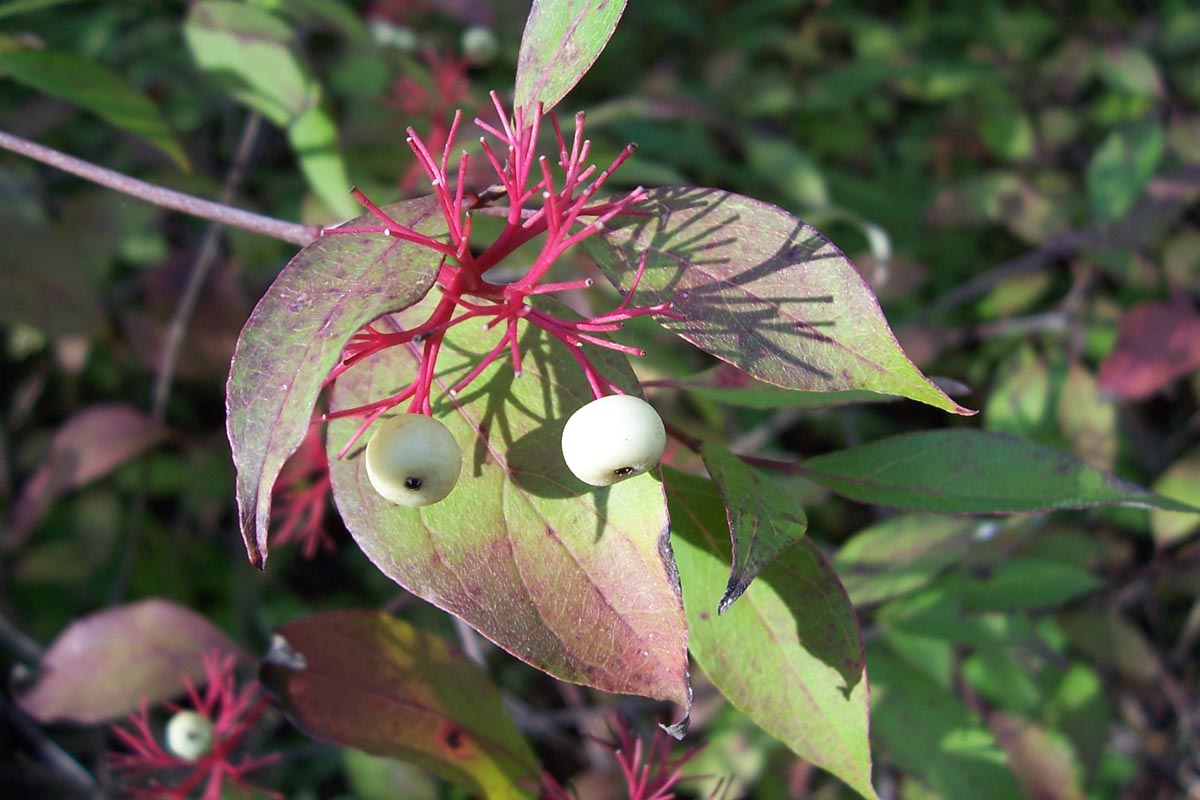
  • Flat-topped clusters of tiny, fragrant, creamy-white flowers, 2 in. wide (5 cm), appear in late spring and sometimes sporadically flower in summer. While not especially showy, they attract happy butterflies and pollinators and give way to clusters of white berries, sometimes tinged with blue, that are greedily devoured by birds.
  • The summer foliage consists of ovate, medium to dark green leaves which turn dull or rich red-purple in fall.
  • Promptly remove root suckers if the colonial spread is undesired
  • Performs best in full sun to part shade, in organically richmedium to wet soils. Red Osier Dogwood is shade tolerant but generally grows best at intermediate to high light levels. It is not fussy about soils provided they are kept evenly moist and well-drained. This plant is more vulnerable to diseases in hot summer climates (south of Zone 7)
  • Generally disease-free, Cornus sericea may be affected by leaf and twig blights, canker, and leaf spots.
  • Easy to groweasy to care for. Cornus sericea is rarely severely damaged by deer.
  • Cornus sericea looks spectacular when massed to emphasize and accentuate the cold season stem color. A great choice for shrub borders, along ponds and streams, or planted in naturalistic plantings where it can freely spread and form thickets.
  • While pruning is not required, it should be noted that the best winter stem color appears on new growth. For the best display, cut the stems flush to the ground every 2-3 years in early spring, just as the leaf buds start to swell. This radical pruning however means that you will have a bare spot in the garden for a few weeks and miss the creamy-white flowers or attractive berries since they only form on second-year growth. Alternatively, if severe pruning seems to be onerous, one-quarter or one-third of the oldest stems could be pruned in the early spring of each year, to stimulate the growth of new stems.
  • Propagated primarily by rooted stem cuttings

Add To Project Request A Quote
Requirement
Hardiness 3,4,5,6,7,8
Heat Zones 1,2,3,4,5,6,7,8
Climate Zones 1, 2, 3, 4, 5, 6, 7, 8, 9, 10, 11, 12, 13, 14, 15, 16, 17, 18, 19, 20, 21, 22, 23, 24, 1B, 2A, 2B, 3A, 1A, 3B
Plant Type Shrubs
Plant Family Cornaceae
Exposure Full Sun, Partial Sun, Shade
Season of Interest Spring, Summer, Fall, Winter, Early Spring, Mid Spring, Late Spring, Early Summer, Mid Summer, Late Summer
Height 5' - 6'
Spread 4' - 5'
Water Needs Average, High
Maintenance Low
Soil Type Acid
Characteristics Fruit & Berries, Attracts Butterflies
Garden Styles Coastal Garden
Planting Place Banks and Slopes, Edging