
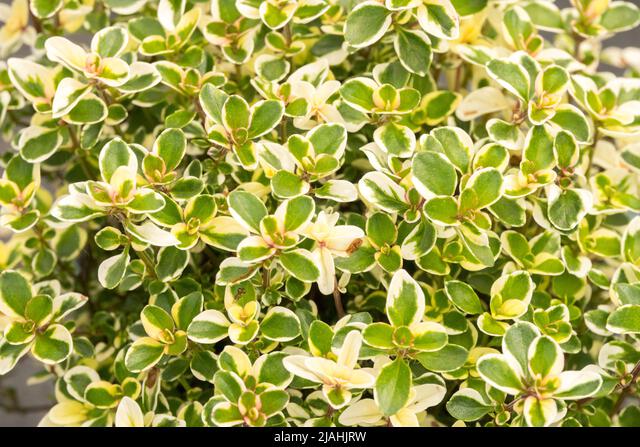
Thymus pulegioides, commonly called broad-leaved thyme or lemon thyme, is a low-growing, evergreen subshrub or semi-woody perennial native to grassy slopes, barrens, and forest openings in the temperate lowlands of Europe. Mature plants will reach up to 8" tall and spread to fill a similar area. The prostrate to spreading, square stems have distinct hairs along their edges. The fragrant, elliptic to oval-shaped leaves can reach 0.5" long and 0.25" wide. Rounded clusters of small, tubular flowers are held on upright stems above the rest of the plant in summer. The flowers are pale pink to purple and reach around 0.25" long. The blooms are highly attractive to bees, butterflies, and other insect pollinators.
The specific epithet pulegioides means "resembling a plant that repels fleas". This is most likely about Mentha pulegium (pennyroyal), which shares similar flowering characteristics and growth habits to this species.
| Requirement | |
|---|---|
| Hardiness | 5,6,7,8 |
| Heat Zones | 5,6,7,8 |
| Climate Zones | 5, 6, 7, 8 |
| Plant Type | Perennials |
| Plant Family | Lamiaceae |
| Exposure | Full Sun |
| Season of Interest | Spring, Summer, Winter, Early Spring, Mid Spring, Late Spring, Early Summer, Mid Summer, Late Summer |
| Height | < 1' |
| Spread | 1' - 2' |
| Water Needs | Low |
| Maintenance | Average |
| Soil Type | Well Drained, Acid |
| Characteristics | Attracts Butterflies, Deer Tolerant, Drought Tolerant, Dry Soil Tolerant |
| Garden Styles | City and Courtyard, Coastal Garden, Formal Garden, Gravel and Rock Garden |
| Planting Place | Beds and Borders, Edging, Small Gardens, Underplanting Roses and Shrubs |